Kitchen Design
Turnkey Kitchen Supply and Installation Northwest: What Homeowners Should Expect
By Strada Design Team · 6 September 2026 · 11 min read
Turnkey Kitchen Supply and Installation Northwest: What Homeowners Should Expect
If you are comparing turnkey kitchen supply and installation northwest options, the main question is not just price. It is who takes responsibility for the whole job, how the kitchen is made, and what happens when design decisions meet real walls, floors and services inside your home. For homeowners across the North West, a turnkey approach can remove a lot of uncertainty, but only if the scope is clear from the start.
At Strada Bespoke Interiors in Rochdale, serving Greater Manchester and Cheshire, that means looking beyond door colours and handles. It means understanding who designs the room, who manufactures the cabinetry, who fits it, what warranty is offered, and how problems are dealt with if the property is not perfectly square. Those details are often what separate a smooth project from a stressful one.
What “turnkey” should mean in a real kitchen project
In plain terms, turnkey means one company takes your project from design through to installation, so you are not left coordinating several separate trades and suppliers yourself. In kitchens, that typically covers measured design, cabinetry manufacture or supply, delivery, installation, and final handover. Some companies also coordinate appliances, worktops, plumbing, electrics and finishing works, but the exact scope varies and should always be written down.
That last point matters. Two quotes can both say “supply and fit” while covering very different things. One may include site survey, removal of the old kitchen, worktop templating, appliance housing, service void planning and aftercare. Another may exclude several of those items and leave you to organise them separately.
When you review a proposal, ask for a line-by-line breakdown of what is included, especially around:
- Initial design and home survey
- Cabinet manufacture or sourcing
- Appliance supply and installation [CONFIRM: appliance supply scope]
- Worktop supply, templating and fitting [CONFIRM: worktop scope]
- Removal of the existing kitchen [CONFIRM: strip-out scope]
- Plumbing, electrics, plastering and flooring coordination [CONFIRM: building works scope]
- Final adjustments, snagging and aftercare
A proper turnkey service should make responsibilities clear. It should not leave you discovering halfway through that one contractor assumed another was dealing with a critical detail.
What turnkey kitchen supply and installation northwest should include
For most homeowners, the value of a turnkey kitchen is not that everything comes from one invoice. It is that the design, manufacturing and fitting stages are connected. Measurements feed into production accurately. The installation team understands how the units were built. Questions are resolved by people who are accountable to the same business.
That joined-up process matters most in practical areas of the room. A well-planned kitchen should allow sensible movement and working space, not just good looks on a brochure. As a guide, many households are most comfortable with around 900mm to 1,000mm between facing runs of units, and nearer 1,000mm to 1,200mm where two people regularly pass each other. You will usually want at least 300mm to 400mm of usable worktop beside a hob or sink where the layout allows. In smaller rooms, a good designer balances those targets against appliance sizes, door swings and storage priorities.
A turnkey supplier should also think through details such as filler panels, end panels, scribing, lighting positions and service access before the fit begins. These are not glamorous topics, but they are often the difference between a kitchen that looks purpose-built and one that feels pieced together.
For homeowners in the North West, the best approach is to look at completed work, ask who will actually be on site, and check how variation requests are handled if you change something during the project. You can browse recent examples on Strada’s completed kitchen projects page to see how different room sizes and styles are resolved in practice.
Why in-house installation makes such a difference
One of Strada’s clearest points of difference is that installation is handled by a 100% in-house team, with no subcontractors. That matters more than many buyers realise.
Subcontracted fitting is common in the kitchen market, and it is not automatically a bad model. Some retailers use experienced independent installers and achieve good results. The trade-off is that responsibility can become blurred. If there is a problem with the survey, a damaged panel, a service position or a fitting decision, the homeowner may find the retailer and installer pointing in different directions.
With an in-house team, communication is typically tighter. The people fitting the kitchen are part of the same business that designed and manufactured or ordered it. Site feedback tends to travel faster, snagging is usually simpler to manage, and there is less risk of installation quality varying from job to job.
That is especially valuable in older North West housing stock, where walls may be uneven, floors may run out, and previous alterations may have left awkward service locations. A good installer does more than assemble cabinets. They make clean adjustments, protect reveals, line up doors consistently, and keep gaps controlled where the room itself is imperfect.
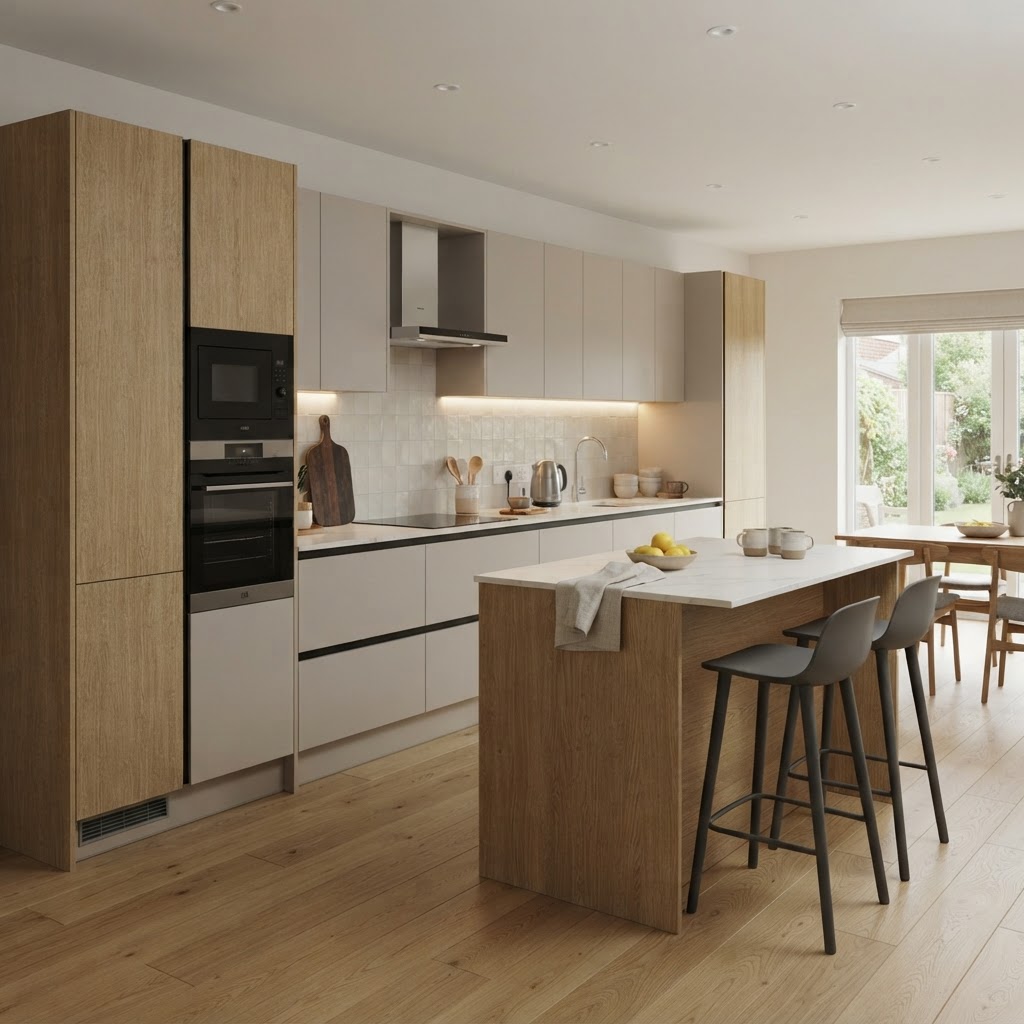
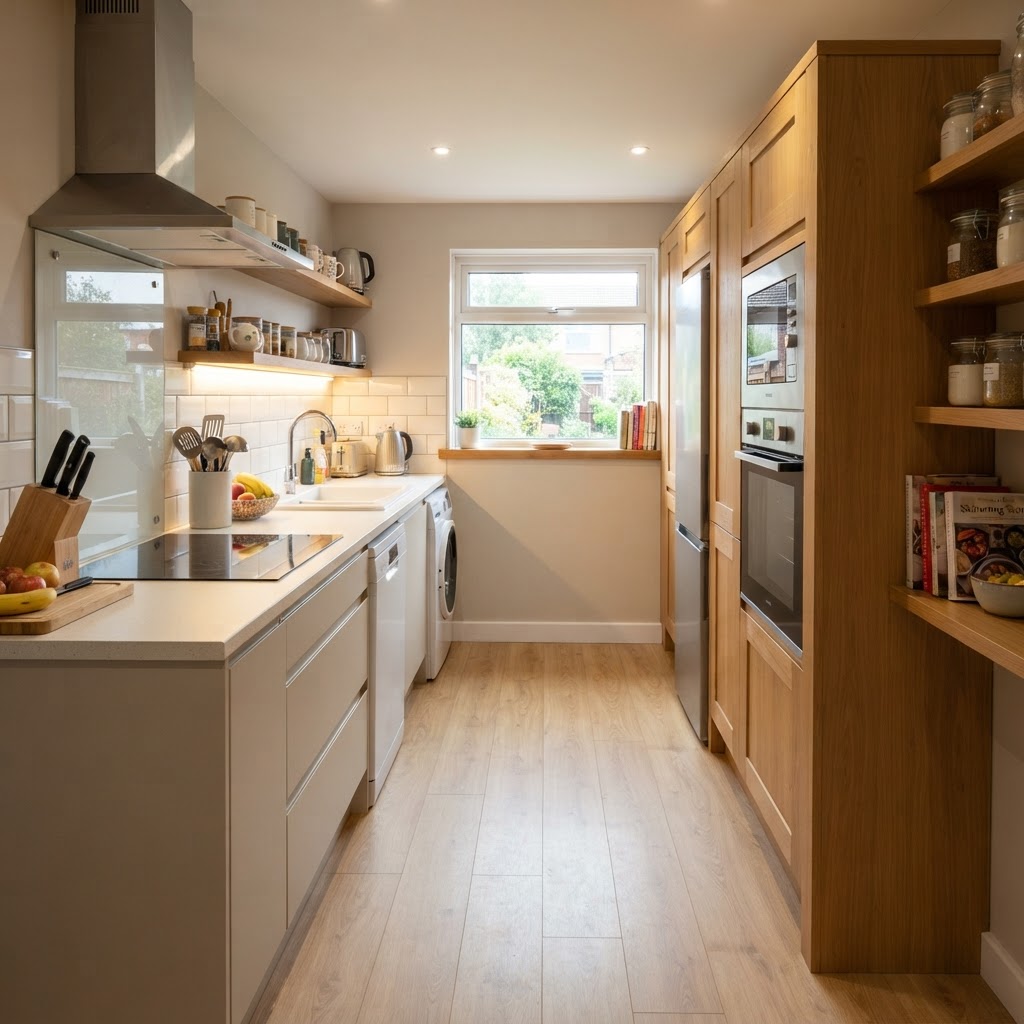 A well-planned galley kitchen fitted for everyday family use.
If you are comparing suppliers, ask these simple questions:
- Are the fitters employed directly or subcontracted?
- Who carries out the final site survey?
- Who makes decisions if there is an issue on installation day?
- Who returns for snagging if something needs adjustment?
You can read more about Strada’s approach on the why choose Strada page.
How manufacturing quality shows up after the showroom visit
Most kitchens look good under showroom lighting. The bigger test is how accurately they are made and how well they stand up to daily use. Strada manufactures bespoke kitchens using CNC-manufactured components and German-engineered cabinetry. CNC means computer-controlled cutting and drilling machinery, which helps produce repeatable, precise parts rather than relying on rough manual marking out. That consistency affects everything from door alignment to how square the cabinets go together.
It is also worth understanding the cabinet box itself, sometimes called the carcass. Carcass tolerances are the acceptable margins of variation in cabinet dimensions. Tighter tolerances usually mean straighter runs, cleaner joints and less on-site correction. In a finished kitchen, that shows up as more even reveals, better drawer alignment and a neater overall fit.
Strada also uses Lamello Cabineo fixings. Briefly, Cabineo is a specialist cabinet connector designed for fast, accurate furniture assembly without the bulkier look of some traditional fixings. For the homeowner, the benefit is not the brand name on its own. It is that the cabinetry can be assembled cleanly and consistently, supporting a more robust finished installation.
These technical details matter because they influence day-to-day durability. A kitchen is opened, closed, wiped down, loaded and unloaded every day. Well-made cabinetry with accurate machining and careful fitting tends to stay looking right for longer.
Strada offers a minimum 25-year warranty on kitchens, which is a useful signal of confidence in the product. As always, homeowners should ask exactly what elements are covered and how aftercare is handled [CONFIRM: full written warranty coverage details].
Budgeting realistically: where Strada sits in the market
Not every bespoke kitchen needs to be presented as an ultra-luxury purchase. For many households, the sensible budget conversation sits in the middle ground: better quality, better fit and clearer service than flat-pack or heavily volume-led options, while still staying rooted in real homes and realistic decisions. Strada’s average project value is £5,000 to £10,000, which is important context if you are assuming “bespoke” automatically means a far higher spend.
Compared with mainstream retailers such as Wren, Magnet, B&Q and IKEA, the trade-off is usually about manufacturing approach, cabinet durability, fit quality and accountability rather than headline ticket price alone. Large retailers can offer broad ranges, regular promotions and convenience. In some cases they may suit straightforward rooms and tighter budgets well. The downside can be more standardisation, less manufacturing flexibility and a more fragmented handover between sales, survey and fitting.
Compared with premium names such as Harvey Jones and similar brands, the decision is often about how much you value a highly tailored design service, handcrafted detail and brand positioning versus overall value and price transparency. Some premium makers offer beautiful work and strong service. Homeowners should still ask the same practical questions about cabinet construction, installation model, specification and what is included in the quote.
For many buyers, the sweet spot is a kitchen that feels genuinely made for the room, performs well for years, and is installed by people who know the product inside out.
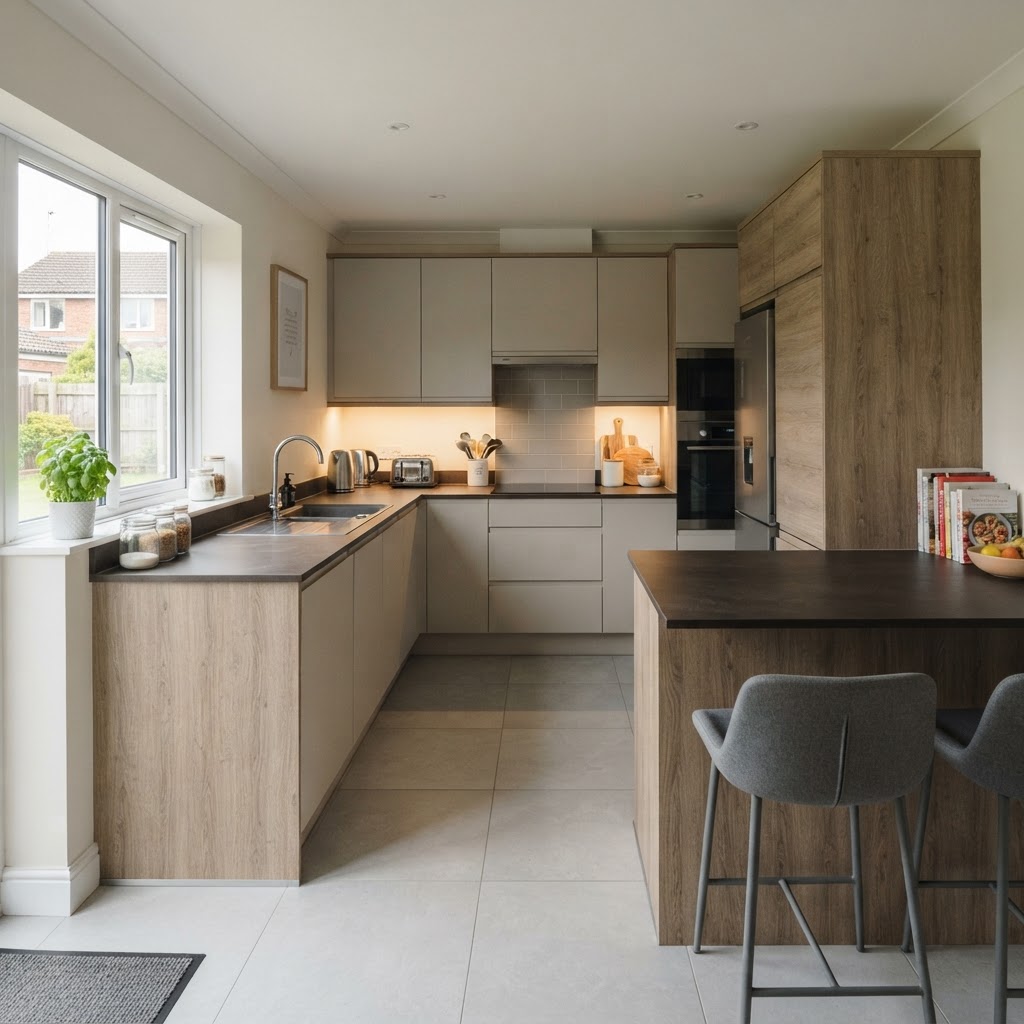
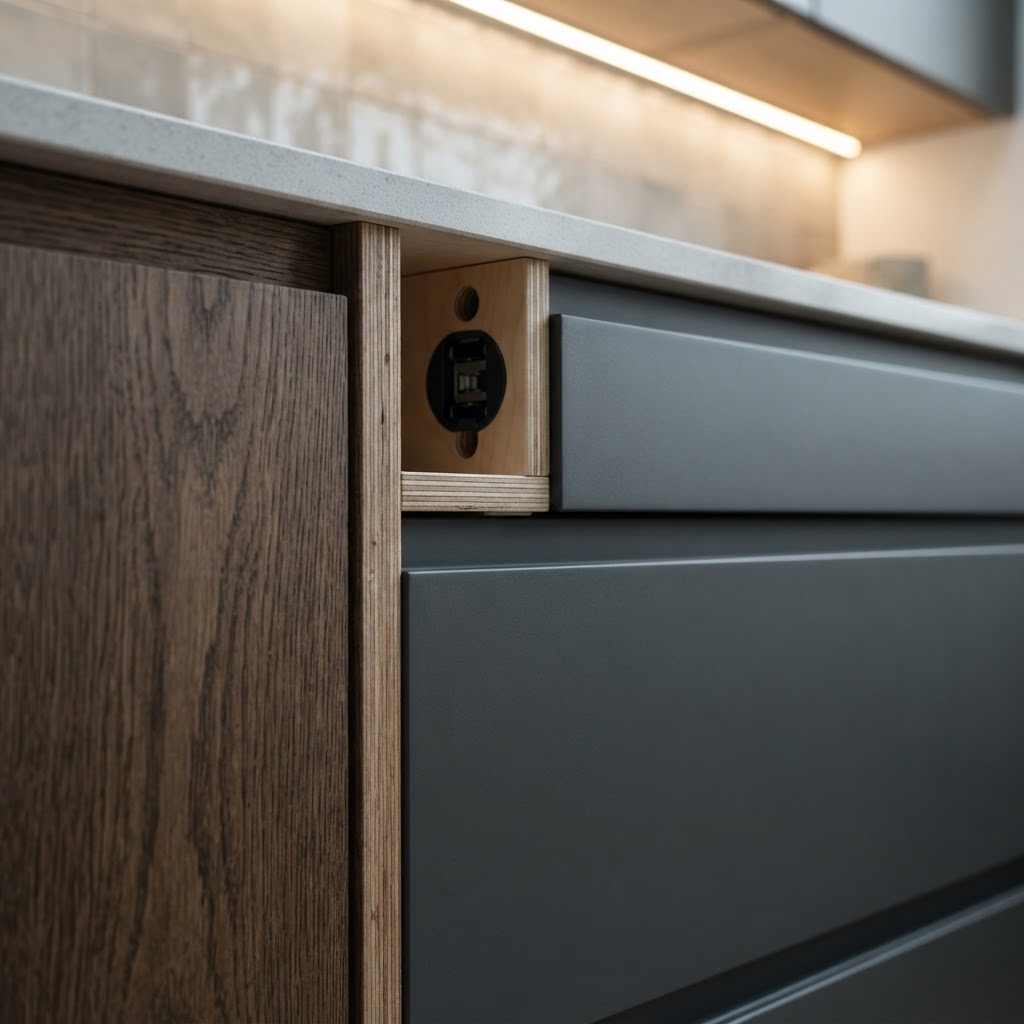 Precise cabinet alignment is a visible sign of manufacturing quality.
How to assess a supplier before you commit
Good buying decisions usually come from a short list of concrete checks, not just instinct. If you are planning a kitchen project in the North West, here is a simple framework to use.
- Check the fit model: Is installation in-house, or outsourced?
- Check the cabinet specification: Ask what the carcasses are made from, how they are machined, and how they are assembled.
- Check the survey process: Who measures the room and when?
- Check the design practicality: Are aisle widths, appliance clearances and storage zones properly considered?
- Check the quote detail: What is excluded, and what could become a variation later?
- Check aftercare: What happens if a panel arrives marked, a door needs adjusting, or a finish issue appears later?
It is also worth asking to see examples of fitted bedrooms or utility-style joinery if you want matching storage elsewhere in the home. A company that manufactures beyond the kitchen often has a broader handle on whole-home fitted furniture. You can explore related spaces on beyond the kitchen if you are thinking about pantries, utility rooms or dressing areas alongside the main kitchen project.
Is a turnkey kitchen the right choice for your home?
For many homeowners, yes. A turnkey approach is often the most straightforward way to reduce avoidable friction, especially if you do not want to spend weeks coordinating separate suppliers, installers and trades. The key is making sure “turnkey” describes a genuinely managed process rather than just a marketing label.
In the case of turnkey kitchen supply and installation northwest, the strongest signs are usually practical: direct accountability, clear manufacturing standards, realistic budgets, and a fitting team that belongs to the same business as the design team. Those are the things that tend to show up in the final finish and in how supported you feel during the project.
If you are at the research stage, the next step does not need to be complicated. A measured conversation about your room, priorities, budget and timeline will tell you quickly whether the proposal is truly joined up. If you would like that kind of discussion, you can arrange a free in-home visit through Strada’s consultation page.
FAQs
What does turnkey kitchen supply and installation actually include?
It usually includes design, survey, cabinetry supply or manufacture, delivery and fitting. Some providers also include appliances, worktops and coordination of other trades, but the scope varies. Always ask for a written breakdown so you know exactly what is covered and what may cost extra later.
Is bespoke always much more expensive than a standard kitchen?
Not necessarily. Bespoke can mean made to suit your room more accurately rather than automatically costing far more. Strada’s average kitchen project value is £5,000 to £10,000, so the conversation is often about better fit, durability and service rather than an ultra-luxury budget.
Why does in-house installation matter so much?
It creates a clearer line of responsibility. If the same business designs and installs the kitchen, communication is usually simpler and issues can be resolved faster. That is particularly useful in older homes where walls and floors may need careful adjustment during fitting.
How can I compare Strada fairly with Wren, Magnet, B&Q or IKEA?
Look beyond the starting quote. Compare cabinet construction, fitting model, manufacturing flexibility, warranty cover, and what is actually included in the price. Large retailers can work well for some budgets and layouts, but homeowners should weigh service continuity and finish quality as well as cost.
What should I ask before approving a kitchen design?
Ask about clearances, storage planning, service positions, worktop space, door swings, lighting, fitting responsibilities and aftercare. It is also sensible to ask who completes the final survey and who will be in your home during installation. Those details affect the lived experience more than brochure visuals do.
Related Articles