Cost & Budgeting
Kitchen Project Budgeting: Making the £5k to £10k Range Work Harder
By Strada Design Team · 7 July 2026 · 10 min read
Kitchen Project Budgeting: Making the £5k to £10k Range Work Harder
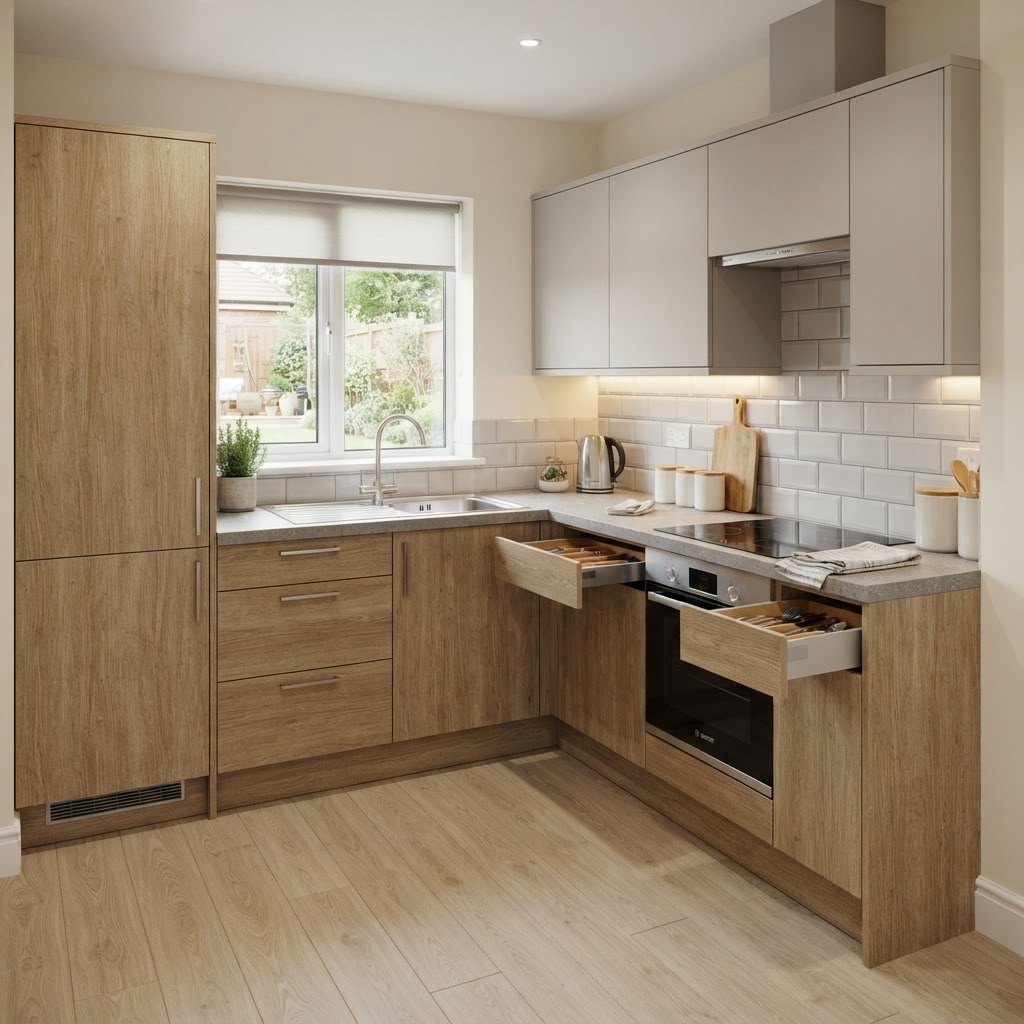
Kitchen project budgeting is rarely about finding the cheapest quote. For most homeowners, it is about getting the right balance of design, storage, durability and fitting quality without drifting into a budget that feels uncomfortable. At Strada Bespoke Interiors, our average kitchen project sits in the £5,000 to £10,000 range, so this is a practical price band we know well. It is not ultra-luxury territory, but it is absolutely enough to create a kitchen that looks considered, fits properly and lasts.
If you are comparing options across Greater Manchester and Cheshire, the key is to understand what really drives cost. A kitchen is not just doors and worktops. It is cabinet construction, manufacturing accuracy, storage specification, preparation work, fitting standards and the way the whole room functions day to day.
What kitchen project budgeting really needs to include
A common mistake is to budget only for the visible parts of the room: cabinets, handles and worktops. In reality, a sensible kitchen budget should account for five areas:
- Cabinetry: the carcasses, doors, drawers, panels and internal storage.
- Worktops and splashbacks: often one of the biggest visual and cost decisions.
- Appliances and sink area: ovens, hobs, extractors, sinks and taps can quickly shift the total.
- Preparation and installation: removal, adjustment, scribing, levelling and final fitting.
- Finishing details: lighting, plinths, end panels, fillers and any decorative features.
Good budgeting means deciding where quality matters most to you. Some households care most about heavy-use drawers, others need better corner storage, while some want a cleaner look with integrated appliances. There is no universal split, but there is a sensible order of priorities: first the cabinet build, then the layout, then the storage, then the finish upgrades.
That order matters because the parts you touch every day are the parts that show wear first. A kitchen can look impressive in a brochure and still feel disappointing after a year if drawers rack, doors drop or the layout fights you.
How to split a £5k to £10k budget in kitchen project budgeting
Within this range, every decision has a trade-off. The right question is not, “What is the best kitchen?” but, “What will make the biggest difference in daily use?”
At the lower end of the range, a strong result usually comes from keeping the layout efficient and directing spend towards solid cabinet quality and competent fitting. That might mean a simpler door style, fewer decorative end panels and careful choices on worktop material, while still prioritising good drawer runners and well-made cabinetry.
As you move higher within the range, you typically gain more flexibility in four areas:
- More customised storage such as deeper pan drawers or internal organisers
- Higher-spec worktop choices or more refined edge details
- Better use of awkward spaces with made-to-measure sizing
- A more tailored finish, including coordinated panels and cleaner appliance housing
For many homeowners, the sweet spot is not adding more units. It is improving the usefulness of the units you already have. A well-planned run of drawers often outperforms a larger number of basic cupboards, because it reduces bending, makes food and cookware easier to organise, and wastes less space at the back of cabinets.
It is also worth remembering that layout changes can be more expensive than they first appear. Moving plumbing, electrics or extraction routes may be worthwhile, but they should be judged against what they genuinely improve. If the current sink position works, keeping services broadly where they are can free up budget for better cabinetry or storage.
Where quality matters most in this price bracket
If you are trying to make £5,000 to £10,000 work harder, three technical areas deserve attention.
First, cabinet construction. Strada kitchens use German-engineered cabinetry and are CNC-manufactured. CNC means computer-controlled cutting and drilling, which improves accuracy and repeatability. In plain terms, panels are produced consistently, so units line up better and fitting is cleaner. When people talk about carcass tolerances, they mean how closely each cabinet matches its intended dimensions. Tighter tolerances help doors align properly, filler panels sit more neatly and whole runs feel more precise.
Second, the assembly method. We use Lamello Cabineo fixings. These are concealed mechanical connectors that help build rigid cabinets without the rough look that can come from more basic assembly methods. For a homeowner, the benefit is not the name itself; it is a cabinet that feels more solid and goes together neatly.
Third, installation quality. Even well-made cabinets can disappoint if they are fitted poorly. Floors are rarely perfectly level, walls are rarely perfectly straight, and older homes often need careful scribing and adjustment. Strada uses a 100% in-house installation team, with no subcontractors. That matters because the people fitting the kitchen are working directly within the same quality standard as the people designing and manufacturing it.
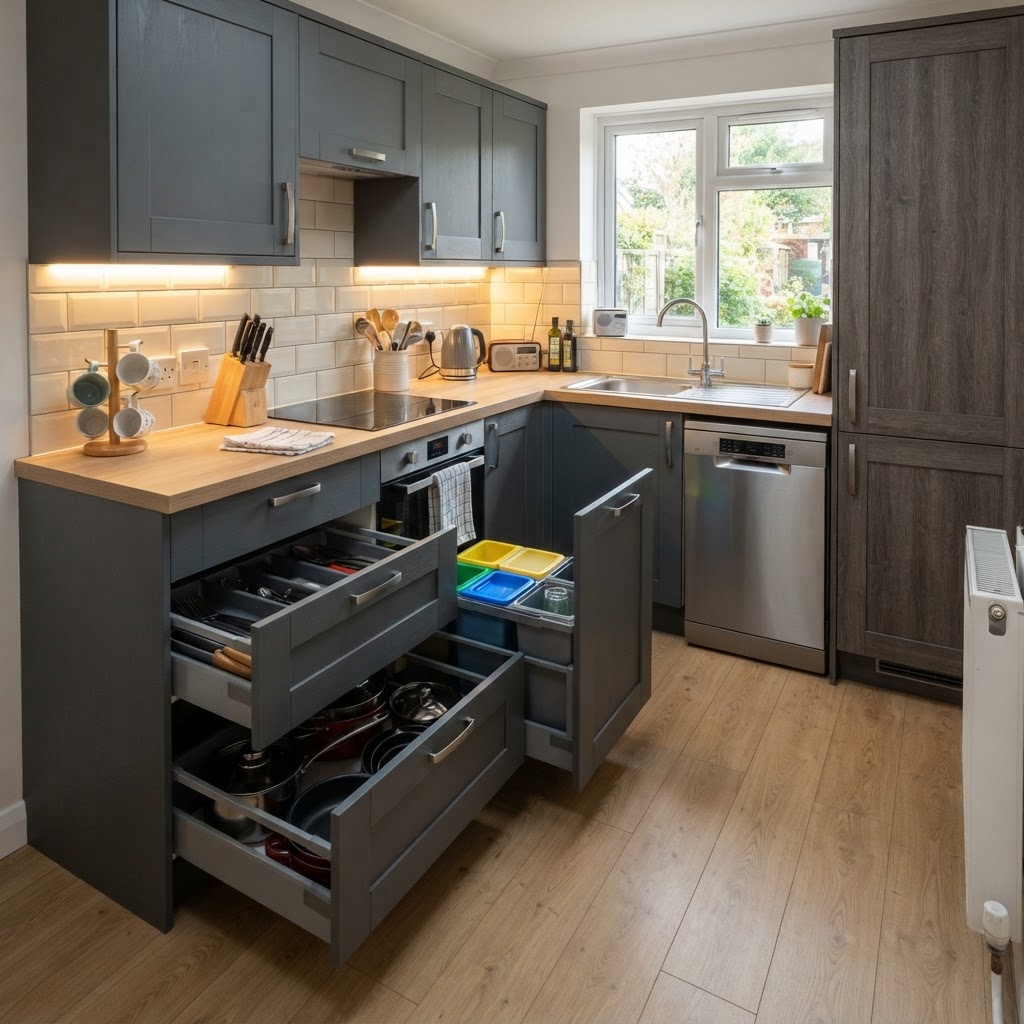
In this budget range, those structural qualities will usually give you more long-term value than spending heavily on decorative extras. Better cabinet engineering and better fitting tend to outlast trend-led upgrades.
Design choices that stretch the budget without looking compromised
The most effective budgets are usually the simplest-looking ones. A calm design often costs less to execute well than a fussy design executed badly.
Here are practical ways to maximise value without the kitchen feeling stripped back:
- Choose a cleaner door style. Slab or simple shaker-style fronts are often easier to keep within budget than heavily detailed options.
- Use drawers strategically. Put drawers where they improve life most: pans, crockery, food storage and waste separation.
- Keep tall units purposeful. Tall housings are useful, but too many can crowd a modest room and add cost quickly.
- Be selective with open shelving. One feature area can soften the room, but too much open storage often creates clutter rather than value.
- Let the worktop do one job well. You do not need the most expensive material everywhere. The right finish and edge profile often matter more than chasing the top-end option.
- Make lighting work harder. Under-cabinet lighting and well-placed task lighting can elevate a simple scheme significantly.
Layout discipline helps too. In smaller or medium-sized kitchens, leave at least around 900mm for key walkways where possible, so doors and drawers can open comfortably. If you are including an island or peninsula, test movement carefully rather than assuming more furniture means a better room. A tighter, better-planned kitchen often feels more premium than a crowded one.
Storage choices should be based on your habits rather than showroom theatre. If you bulk-buy, pantry-style storage may matter. If you cook frequently, wider pan drawers and a practical prep zone will matter more. The best design is the one that removes friction from everyday tasks.
Bespoke vs big-name retailers in the £5k to £10k range
This is where many buyers pause, and fairly so. Mainstream retailers such as Wren, Magnet, B&Q and IKEA can offer attractive entry pricing, especially if your room is straightforward and you are comfortable working within standard sizes. For some projects, that is a sensible route.
The trade-off usually appears when the room is awkward, storage needs are specific, or you want a more tailored result. Standard unit sizes can lead to more fillers, more compromises around corners and appliance housings, and less freedom to fine-tune the layout. That does not make them bad kitchens; it simply means the design solution is built around a standard system.
At the more premium end, brands such as Harvey Jones compete on craftsmanship and service, but many homeowners assume that level of care automatically means a much higher project band. Strada sits in a more accessible average project range while still focusing on bespoke manufacturing, quality cabinetry and service transparency.
That is often the real comparison to make in kitchen project budgeting: not just who has the lowest headline price, but who gives you the best combination of cabinet quality, practical design and fitting control for the money you are comfortable spending.
If you want to see how different briefs translate into real rooms, it helps to look through completed kitchen projects rather than relying only on brochure imagery.
Questions to ask before you commit your budget
A quote can look competitive and still hide compromises. Before choosing a supplier, ask clear practical questions:
- Are the cabinet sizes standard only, or can they be tailored to the room?
- How are the cabinets manufactured and assembled?
- Who installs the kitchen: employees or subcontractors?
- What is included in the quote, and what sits outside it?
- How are awkward walls, floors and ceiling variations handled?
- What warranty is provided on the kitchen?
On that last point, Strada kitchens come with a minimum 25-year warranty. That is useful not because a warranty replaces build quality, but because it usually reflects confidence in the product behind it.
It is also worth asking how the kitchen is measured before manufacture. Accurate site surveying reduces the risk of filler-heavy designs, misaligned service cut-outs and delays on fitting day. Precision upstream usually saves stress downstream.
If you are weighing these points up, our why choose Strada page gives a clearer view of how we approach design, manufacturing and installation.
A simple budgeting checklist for homeowners
Before you request final designs or compare quotes, work through this checklist:
- Set your ceiling. Decide the maximum you are genuinely comfortable spending, not the number you hope the project will come in at.
- List your non-negotiables. For example: more drawer storage, an integrated dishwasher, better recycling storage, or a breakfast seating spot.
- Separate needs from nice-to-haves. Keep a short list of upgrades you can add only if budget allows.
- Measure your frustrations. What does your current kitchen do badly: too little prep space, poor storage, awkward corner access, not enough sockets?
- Think about lifespan. If you expect to stay in the property, prioritise cabinet durability and fitting quality over short-term visual extras.
- Ask for clarity. Make sure quotes explain what is included for cabinetry, worktops, appliances and installation.
Good kitchen project budgeting is not about squeezing every supplier down to the lowest possible number. It is about understanding where value comes from, then buying the parts of the kitchen that you will appreciate every single day.
If you are planning a kitchen in the £5,000 to £10,000 range, a bespoke approach can still make strong financial sense when the design is disciplined, the cabinetry is well engineered and the fitting is handled properly in-house.
If you would like practical advice on what is realistic for your room and budget, you can book a free in-home design consultation. It is a straightforward way to understand the options without pressure.
FAQs
Is £5,000 to £10,000 enough for a bespoke kitchen?
Yes, in many homes it is enough for a well-planned bespoke kitchen, especially if the layout is sensible and spending is directed towards cabinetry, storage and fitting quality first. The key is to prioritise what affects daily use most, rather than trying to include every upgrade at once.
What should I spend more on first?
Start with cabinet quality, drawer performance and installation. Those areas affect how solid the kitchen feels and how well it wears over time. Worktop upgrades and decorative details can be worthwhile, but they usually make less difference than well-made units fitted accurately.
Are flat-pack kitchens always cheaper overall?
Not always. The initial price can be lower, but total value depends on the room, the fitting standard and how much compromise is needed around awkward spaces. If you end up with more fillers, less efficient storage or additional fitting complications, the savings may narrow.
Does in-house fitting really make a difference?
Usually, yes. A kitchen is only as good as its installation. An in-house team tends to offer stronger continuity between survey, design and fitting, which matters when walls are uneven, floors need adjustment or panels need careful scribing for a cleaner finish.
Related Articles