Materials & Craftsmanship
Durable Matt Finish Kitchen Cabinet Doors: What to Look For
By Strada Design Team · 11 July 2026 · 12 min read
Durable Matt Finish Kitchen Cabinet Doors: What to Look For
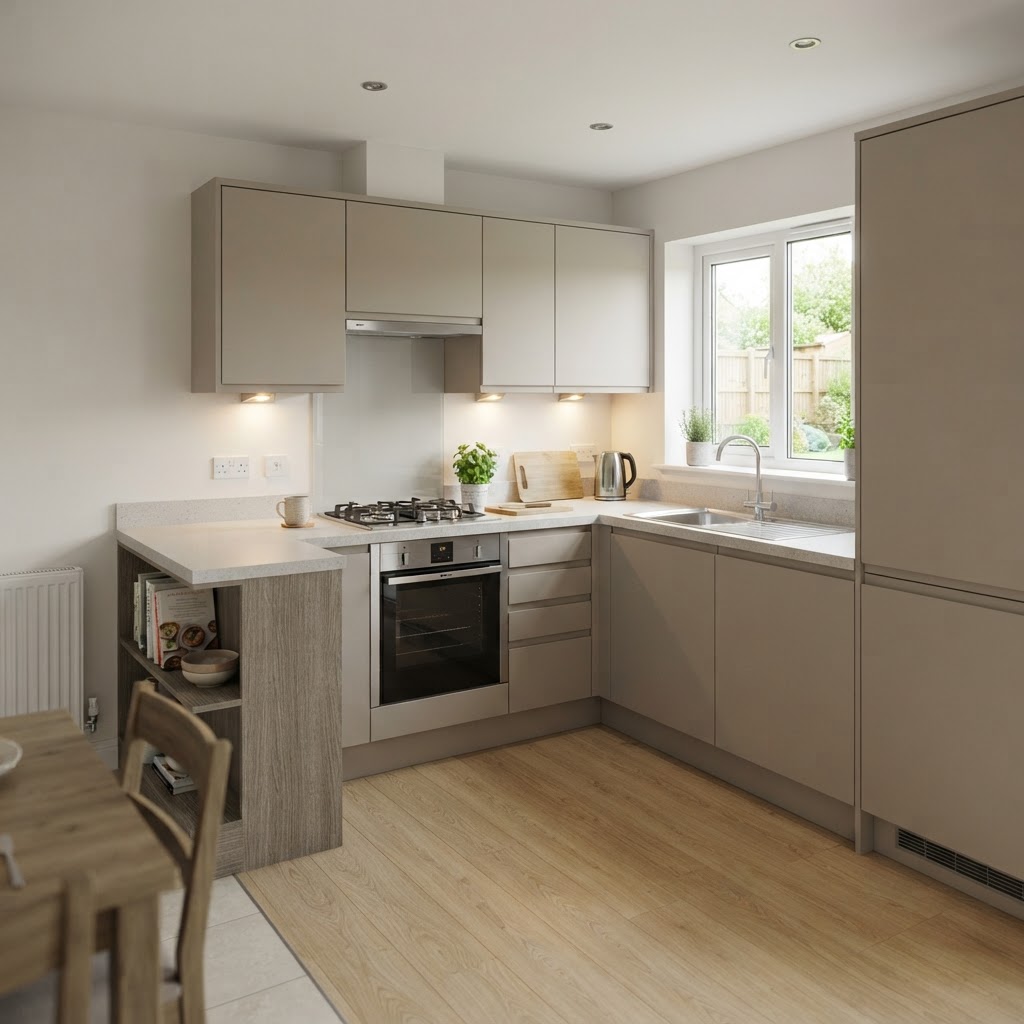
When you are comparing durable matt finish kitchen cabinet doors, it is easy to focus on colour first and durability second. In practice, the opposite approach usually leads to a better kitchen. The finish, the core material, the edging, the cabinet accuracy and the standard of fitting all affect how your doors will look after a few years of steam, cleaning, knocks and daily use.
Matt doors are popular for good reason. They soften light, hide minor smudges better than high gloss in many colours, and work across modern slab styles, shaker doors and woodgrain effects. But not every matt door is built the same. Two kitchens can look similar in a showroom and perform very differently once they are installed in a real family home.
At Strada Bespoke Interiors in Rochdale, serving Greater Manchester and Cheshire, many projects sit in the £5,000 to £10,000 range. That means this is not about over-specifying for the sake of it. It is about choosing materials and construction details that give you sensible long-term value. Our bespoke kitchens are CNC-manufactured, use German-engineered cabinetry, are assembled with Lamello Cabineo fixings, and are installed by a 100% in-house team with no subcontractors. Kitchens also come with a 25 years minimum warranty.
What makes durable matt finish kitchen cabinet doors last?
Durability is not one single feature. It is a combination of surface performance, structural stability and fitting quality. A matt door can feel solid on day one but still age badly if the edge banding lifts, the hinges are under strain, or moisture gets into vulnerable areas near the sink, kettle or dishwasher.
As a homeowner, these are the main things worth checking:
- Surface type: laminate, lacquered, painted, PET or foil-wrapped doors all wear differently.
- Core material: the board underneath the finish affects stability, weight and moisture resistance.
- Edge protection: exposed or poorly finished edges are often where early failures start.
- Door and carcass accuracy: straight, consistent cabinetry keeps doors aligned and hinges working properly.
- Installation quality: even a well-made kitchen will underperform if it is badly levelled or poorly adjusted.
A good question to ask any supplier is not simply, “Is this door durable?” but “What are the weak points of this finish, and how are they managed?” A confident manufacturer or designer should be able to answer that clearly.
Surface types: which matt finish holds up best?
Not all matt finishes mean the same thing. The word describes the look, not the build method. That matters because the build method tells you more about scratch resistance, heat resistance, colour consistency and how easy the door is to maintain.
Laminate matt doors are often a strong practical choice. A decorative surface layer is bonded to a board, creating a hard-wearing finish that usually copes well with everyday use. Good laminates can offer excellent consistency and are often well suited to busy households. If you want an understated, modern look without treating the kitchen like a museum, laminate deserves serious consideration.
PET or anti-fingerprint matt doors can also perform well, especially if keeping visible marks down is a priority. Some anti-fingerprint kitchen cabinets genuinely do reduce the appearance of greasy handprints, although no surface is completely mark-proof. These finishes are especially useful on darker colours, where fingerprints show more readily.
Lacquered matt doors can look refined and smooth, with a very even colour. The trade-off is that they may show scratches or chips more obviously than a robust laminate, depending on the product. They can be a great choice where appearance is the main priority and the household is relatively gentle on the kitchen.
Painted timber or painted MDF shaker doors suit more classic styles, but the paint finish needs careful assessment. Painted doors can be repaired more easily in some cases, which is a point in their favour, but painted surfaces may show knocks sooner than some laminates. If you love the look, this is not a reason to rule them out; it simply means expectations should be realistic.
Foil-wrapped or vinyl-wrapped matt doors can offer a lower initial cost, but they are the type most people should examine carefully in high-heat and high-moisture zones. Poorly made versions can be more vulnerable to lifting at corners or edges over time. That does not mean every wrapped door is bad, only that build quality becomes especially important.
In short, if your priority is kitchen cabinet door durability rather than just first impressions, good-quality laminate and well-specified anti-fingerprint matt finishes are often among the safest places to start.
Cabinet cores, edging and moisture resistance
The visible face of the door gets most of the attention, but the edges and the board underneath often decide how well it ages. In everyday kitchens, moisture usually attacks the weakest point first. That is why swelling at sink units, bubbling near kettles and damage beside integrated dishwashers are common complaints in lower-quality kitchens.
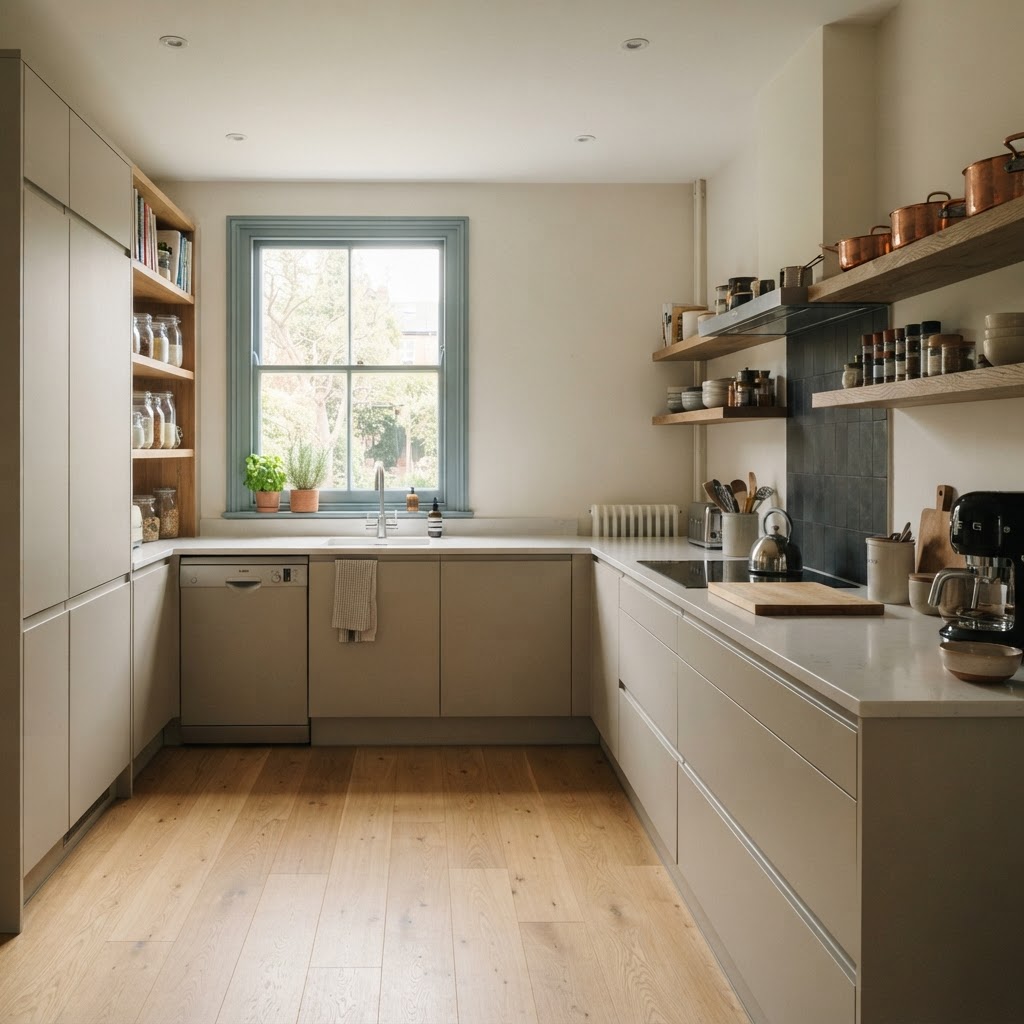
Look closely at door edges. Are they crisp, well bonded and consistent? Do they feel robust, or slightly fragile? On slab doors, edging quality is especially important because every line is on show. A neat edge is not just about appearance; it helps protect the core from moisture and impact.
The door core also matters. Stable board materials help prevent warping and keep hinges working properly. Heavier is not always better, but flimsy doors often feel light for the wrong reasons. Ask what the door is made from and how it is finished at the edges.
Useful questions for a design appointment or showroom visit include:
- What is the door made from beneath the matt surface?
- How are the edges finished and protected?
- Which areas need extra thought around steam and splashes?
- How easy is this finish to clean without polishing or special products?
- What would the supplier expect this door to look like after five years of normal use?
If a supplier cannot explain those basics, the door choice probably needs more scrutiny.
Why manufacturing accuracy matters for durable matt finish kitchen cabinet doors
One of the less obvious factors in durable matt finish kitchen cabinet doors is the cabinet box behind them. If the carcasses are not made accurately, doors may be under constant strain. That can show up as uneven gaps, hinges working loose, rubbing doors, or a kitchen that never quite looks settled.
This is where CNC manufacturing makes a practical difference. CNC-manufactured means the components are cut by computer-controlled machinery for repeatable accuracy. In plain terms, each panel is produced to a very consistent size. That helps create tighter carcass tolerances, meaning the finished cabinet dimensions are closer to exactly what they should be. Tighter tolerances usually mean cleaner alignment, smoother door operation and fewer adjustments over time.
At Strada, cabinetry is German-engineered and assembled using Lamello Cabineo fixings. If that term is unfamiliar, Cabineo is a concealed mechanical fixing system that pulls cabinet parts together tightly and accurately. It is one of those details most homeowners never see, but it contributes to rigidity and reliable long-term performance.
Installation matters just as much. A cabinet can leave the workshop perfectly square and still perform badly if it is fitted carelessly. That is one reason a 100% in-house installation team is valuable. When design, manufacture and fitting are joined up, there is usually better accountability and more consistent results than in a model that relies on subcontracted fitting.
If you want to see how this translates into finished spaces, our completed kitchen projects show the kind of detailing and alignment homeowners should expect from a well-made fitted kitchen.
Living with matt kitchen doors every day
Durability is not only about whether a door survives. It is also about how easy it is to live with. Some matt kitchen doors look lovely in a brochure but become irritating if they mark easily, clean badly or show every touch on darker colours.
Here are the main day-to-day trade-offs:
- Fingerprints: dark matt colours often show hand marks more than mid-tones and lighter shades. Anti-fingerprint finishes can help.
- Scratches: very flat, ultra-smooth finishes can make scratches easier to spot in certain lighting.
- Cleaning: matt surfaces should usually be cleaned with mild soap and a soft cloth, not abrasive pads or strong solvents.
- Light reflection: matt finishes reduce glare, which many homeowners prefer in open-plan kitchens.
- Touch points: doors around bins, pantries, fridges and breakfast cupboards take more wear than occasional-use units.
If you have children, cook frequently, or want the kitchen to feel easy rather than precious, think carefully about colour as well as finish type. Mid-tone greys, warm neutrals and textured woodgrain effects often age gracefully because they disguise minor marks better than very dark plain matt or very pale painted finishes.
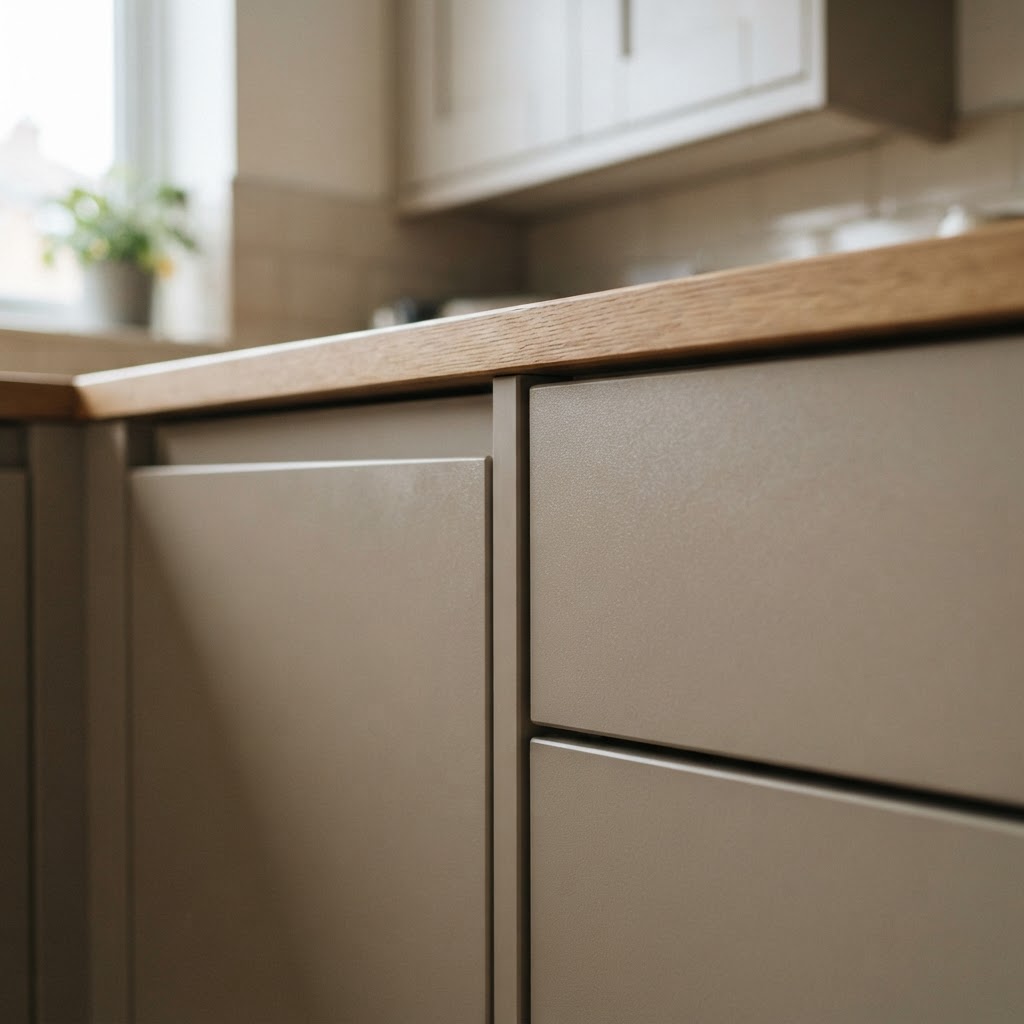
Handle choice also affects wear. True handleless or J-pull styles keep the look streamlined, but the touch points become concentrated on the top edge or rail. That is not a problem in itself, provided the finish is suitable for repeated contact and easy cleaning.
Design details that improve durability without inflating the budget
There is a tendency to talk about durable kitchens as though they must be ultra-premium. In reality, sensible design decisions often do as much for longevity as expensive upgrades. For a typical project in the £5,000 to £10,000 range, it makes sense to spend where the wear happens.
Good value decisions include:
- Prioritise hard-wearing door finishes on the most-used elevations, even if you keep other choices simpler.
- Use tall units thoughtfully so fewer worktop appliances create less splashing, steam and clutter around door fronts.
- Add internal storage that reduces slamming and overstuffing in high-use cupboards.
- Choose stable, easy-clean finishes for doors beside the hob, sink and dishwasher.
- Keep detailing simple if long-term maintenance matters more to you than decorative profiling.
Simple slab doors in a robust matt finish can be one of the smartest combinations for durability, especially when paired with accurate cabinetry and careful fitting. If you prefer a more classic look, a shaker door can still be a sound choice, but it is worth understanding how the painted finish will behave over time and what level of touch-up may be realistic.
For more on Strada's approach to build quality, design and installation, you can read why choose Strada.
Bespoke vs off-the-shelf: where the value really sits
If you are comparing durable matt finish kitchen cabinet doors across different suppliers, it helps to make a fair like-for-like comparison.
Mainstream brands such as Wren, Magnet, B&Q and IKEA can offer convenience, familiar price points and faster standardised options. For some households, that is enough. If the kitchen is for a lower-use room, a rental, or a shorter ownership horizon, an off-the-shelf solution may be perfectly reasonable.
The trade-off is usually flexibility, cabinet fit, and sometimes the consistency of specification across the whole project. Bespoke manufacturing allows awkward walls, alcoves and storage needs to be resolved more precisely, rather than filled with standard units and filler panels wherever the room does not cooperate.
At the more premium end, brands such as Harvey Jones and similar makers often compete on craftsmanship, design service and finish quality. The question for many homeowners is whether that level of spend is necessary for the outcome they want. A well-planned bespoke kitchen should not feel vague or inflated on price. It should be clear what you are paying for: accurate manufacture, durable materials, proper installation and service that continues after fitting.
That is often where long-term value sits. Not in the cheapest ticket price, and not automatically in the highest one either, but in a kitchen that is designed properly, built precisely and installed carefully enough to stay looking right.
FAQs
Are matt kitchen cabinet doors harder to keep clean than gloss? Not necessarily. Matt finishes show less glare and can disguise some light smudging better than gloss, but dark matt colours may still show oily fingerprints. The easier-clean options are usually robust laminates or anti-fingerprint finishes, paired with sensible colour choices and regular wiping with a soft cloth.
What is the best finish for a busy family kitchen? For many households, a good-quality laminate or anti-fingerprint matt finish offers one of the best balances of appearance, durability and maintenance. Painted finishes can look excellent, but they may need more care in high-traffic kitchens, especially around corners, handles and appliance runs.
Do matt doors scratch more easily? That depends on the surface type, not just the fact that it is matt. Some matt lacquers can show scratches more readily than laminates, while textured matt finishes may hide wear better. Always ask how the finish performs in everyday use, not just how it looks under showroom lighting.
Why does cabinet construction matter if I am only choosing doors? Because doors rely on the cabinet behind them being square, stable and accurately fitted. Better carcass tolerances reduce stress on hinges and keep reveals even. That is why CNC manufacture, rigid cabinet assembly and careful fitting all contribute to a kitchen that still looks aligned years later.
If you are weighing up finishes for your own project, a free in-home design consultation can help you compare options in a practical way, with advice based on how you actually use the room rather than what looks best under showroom lights.
Related Articles